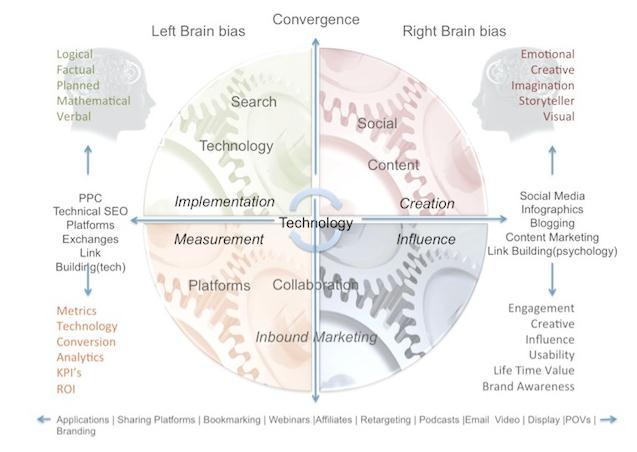
People rarely make decisions on a website in a completely rational way. They skim, judge quickly, look for reassurance and decide whether taking the next step feels worth their time.
That means a high-converting website is not just about looking good. It needs to feel clear, credible and easy to use from the moment someone lands on the page.
Every colour, headline, button, and layout choice influences how visitors think, feel, and behave. High-converting websites don’t succeed by accident; they are carefully designed around human psychology.
Understanding the principles behind user behaviour can dramatically improve engagement, trust, and conversions. If the page feels confusing, cluttered, slow or vague, visitors may leave before they understand what you offer. But when a website guides people clearly, answers their concerns and makes the next step feel simple, this can help with whether your goal is generating leads, increasing sales, or encouraging sign-ups,. This is where psychology plays a central role in turning visitors into customers.
First Impressions Happen in Seconds
Studies consistently show that users form an opinion about a website within a few seconds. This initial judgment determines whether they stay or leave.
A cluttered or outdated website creates friction and uncertainty. On the other hand, a clean and modern interface immediately communicates professionalism and trustworthiness.
First impressions are not just about design preferences. They affect whether a visitor believes the business is credible, relevant and worth spending more time with.
Key elements that shape first impressions include:
- Minimal and organised layouts
- Fast loading speed
- Professional typography
- Consistent branding
- High-quality visuals
- Mobile responsiveness
- Obvious navigation
- A clear next step
Users subconsciously associate polished design with credibility. If a website feels difficult to navigate or visually overwhelming, visitors often assume the business itself is unreliable.
This is why the top section of a page is so important. Vistors should be able to understand what the business does, who it helps and what action they can take next without having to work too hard.
The Power of Visual Hierarchy
Visual hierarchy guides users toward the most important information. High-converting websites strategically direct attention using size, spacing, contrast, and positioning.
For example:
- Larger headlines grab immediate attention
- Contrasting CTA buttons stand out
- White space improves readability
- Images naturally attract the eye
When users can instantly understand what a website offers and what action to take next, conversion rates improve significantly.
Clear Messaging Reduces Mental Effort
Human brains prefer simplicity. Too many competing elements create cognitive overload, making users less likely to act.
The best websites reduce decision fatigue by clearly guiding users through a logical journey.
This applies just as much to the copy as it does to the design. If a visitor must decode vague phrases, jargon or overly clever messaging, they are more likely to lose interest.
Strong website messaging should answer three questions quickly:
- What do you offer?
- Who is it for?
- Why should someone choose you?
Once those basics are clear, the rest of the page can build confidence through proof, detail and reassurance.
Trust Signals Influence Decision-Making
People are naturally skeptical online. Before taking action, users look for reassurance that a business is legitimate and reliable.
That’s where trust signals come in.
Common trust building elements include:
- Reviews and ratings
- Security badges
- Recognisable client logos
- Clear contact information
- Professional design
Social proof is especially powerful because humans are heavily influenced by the behaviour of others. If potential customers see that others trust your brand, they are more likely to do the same.
Emotional Triggers Drive Conversions
Although consumers often believe they make rational decisions, emotions heavily influence purchasing behaviour.
High-converting websites use emotional triggers to create stronger user engagement.
Examples of Emotional Psychology in Web Design:
- Fear of missing out (FOMO)
- Scarcity (“Only 2 spots left”)
- Urgency (“Offer ends tonight”)
- Aspiration and lifestyle imagery
- Relief from pain points
- Belonging and community
Emotion creates momentum. Logic may justify a purchase, but emotion often initiates it.
Colour Psychology Matters More Than You Think
Colours shape perception and emotional response.
Different colours communicate different feelings:
- Blue = trust and security
- Red = urgency and excitement
- Green = growth and positivity
- Black = luxury and sophistication
- Orange = energy and action
Successful brands choose colour palettes strategically to align with their audience and goals.
However, consistency matters more than choosing the “perfect” colour. A cohesive visual identity builds familiarity and trust over time.
It is also important not to oversimplify colour psychology. A red button will not automatically improve conversions, and a blue website will not automatically make people trust a brand. Context matters.
Simplicity Increases Conversion Rates
One of the biggest mistakes websites make is trying to do too much at once.
Too many pop-ups, options, animations, or calls-to-action can overwhelm users. Psychological studies show that excessive choice often reduces action altogether; a concept known as “choice paralysis.”
High-converting websites typically:
- Focus on one primary goal per page
- Use concise messaging
- Eliminate unnecessary distractions
- Keep navigation simple
- Use clear calls-to-action
The easier a website feels to use, the more likely visitors are to convert.
This does not mean every page needs to be short. It means every section needs to have a purpose. Long pages can convert well when they are structured clearly and answer the questions users are likely to have before taking action.
The Role of Cognitive Fluency
Cognitive fluency refers to how easily people can process information.
When content is easy to read and understand, users perceive it as more trustworthy and credible.
Ways to Improve Cognitive Fluency:
- Short paragraphs
- Clear headings
- Simple language
- Readable fonts
- Logical page structure
- Bullet points and spacing
Confusing websites increase mental effort, causing users to leave before taking action.
For SEO and conversion performance, this is especially important. A page may attract traffic, but if the content does not quickly match what the user expected to find, that traffic is unlikely to turn into meaningful action.
Effective Calls-to-Action Use Behavioural Psychology
A call-to-action (CTA) is one of the most important psychological elements on a website.
Weak CTAs create hesitation. Strong CTAs create clarity and momentum.
High-converting CTAs often:
- Use action-oriented language
- Focus on benefits
- Reduce perceived risk
- Create urgency
- Stand out visually
Compare:
- “Submit”
vs - “Get My Free Consultation”
The second CTA feels more personal, valuable, and outcome-driven.
Mobile Experience Is Psychological Too
Mobile users behave differently from desktop users. They expect speed, simplicity, and intuitive interaction.
A frustrating mobile experience creates immediate negative emotional responses.
Mobile optimisation should include:
- Fast load times
- Thumb-friendly navigation
- Large clickable buttons
- Minimal scrolling friction
- Easy form completion
The smoother the mobile experience, the lower the resistance to conversion.
A poor mobile experience can also change how people feel about the brand itself. If a page is difficult to use, slow to load or awkward to navigate, users may associate that frustration with the business.
Storytelling Creates Connection
Humans are naturally drawn to stories. Storytelling helps users connect emotionally with a brand rather than simply consuming information.
Rather than listing features, high-converting websites explain:
- The problem
- The transformation
- The outcome
Story-driven messaging helps visitors imagine themselves succeeding with your product or service.
Data and Psychology Work Together
The most effective websites continuously test psychological principles through data.
This is why successful brands invest in:
- A/B testing
- Heatmaps
- User behaviour analytics
- Conversion tracking
Small psychological adjustments (like changing button colour, headline wording, or page layout) can produce major improvements in conversion rates.
Bringing Your Website Psychology Together
High-converting websites are not just visually appealing; they are psychologically strategic. They reduce friction, build trust, guide attention, and create emotional motivation.
At its core, conversion optimisation is about understanding how people behave online. When websites align with how people naturally think and make decisions, engagement and conversions increase.
The businesses that perform best online are the ones that design for real people – not just aesthetics. A strong website should look good, but it also needs to help users feel confident enough to take action.








Leave a Reply