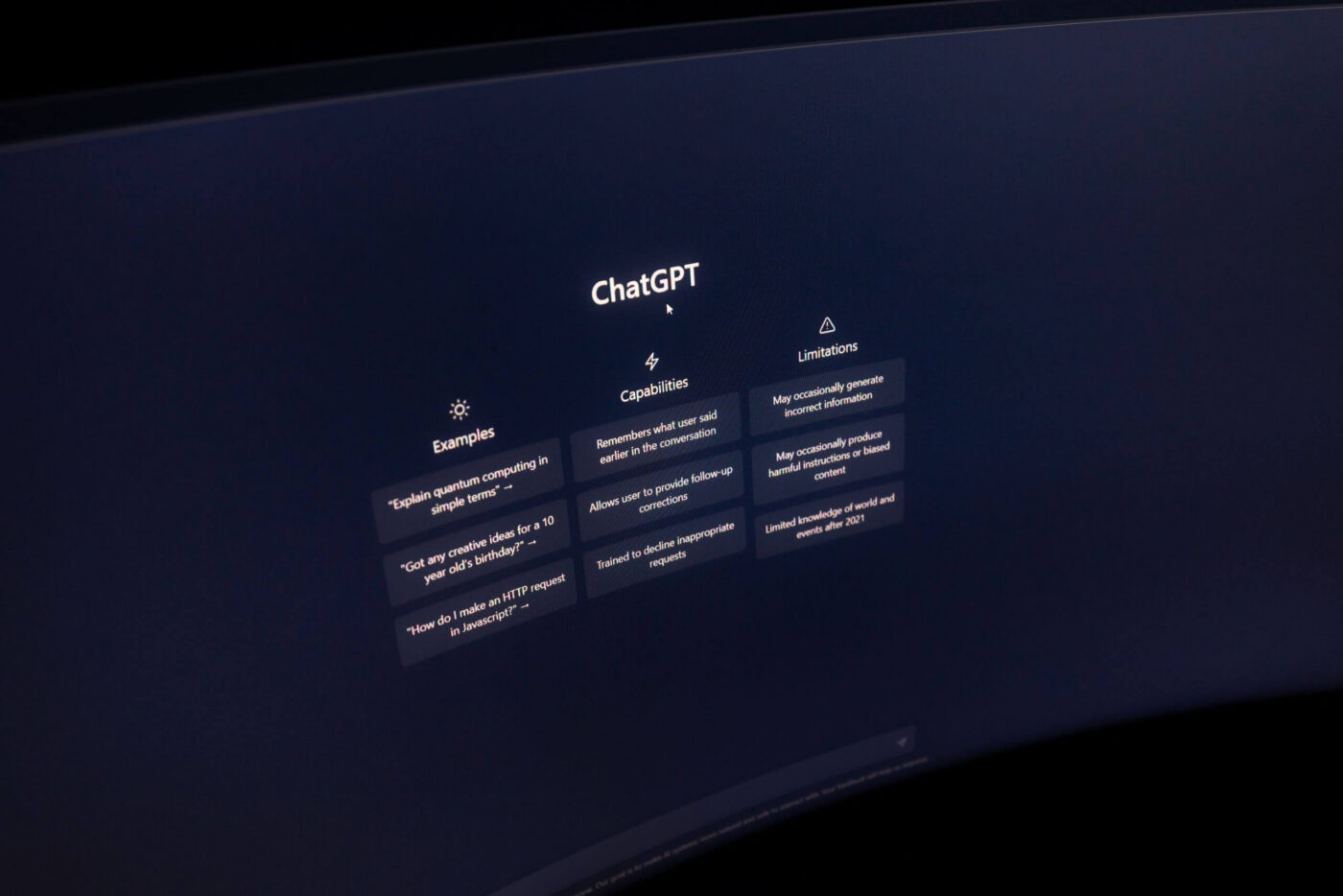
Your competitors may already be appearing in AI search results for the questions your customers are asking.
The difficult part is knowing whether your own brand is showing up alongside them.
For years, SEO reporting has given marketers a relatively clear set of measures. Rankings, organic traffic, click-through rates and conversions all help us understand how a website is performing in search.
AI search is making that picture more complicated.
A potential customer can now ask an AI tool to recommend a provider, compare products or explain which options are worth considering. They might see your competitors mentioned without ever visiting their websites. They might see your brand too, but that visibility won’t necessarily appear in Google Analytics.
This creates a new consideration for SEO teams: how visible is your brand when customers use AI to research the products and services you offer?
Search visibility is becoming harder to measure
Traditional search gives us a useful visual reference. You can see the businesses ranking above you, understand the type of content Google is rewarding and track changes over time.
AI-generated answers work differently.
A customer might ask:
“Which are the best companies for [service]?”
They could receive a shortlist of several businesses, along with an explanation of what each one offers.
Another customer might ask:
“What should I consider when choosing a [product or service]?”
The response could reference information from several websites, reviews, publications and other sources.
There may be no obvious ranking position to track. There may not even be a click.
For marketers, that means an important part of search visibility can sit outside the metrics we’ve traditionally used to assess SEO performance.
Your competitors could be influencing customers before you know it
Consider someone who is researching a significant purchase.
They might start by asking an AI tool for advice, rather than typing a product category into Google. They could ask for recommendations, compare different providers or ask which brands are considered reliable.
If your competitor appears repeatedly during that research, they’ve already gained an opportunity to influence the customer’s shortlist.
You may still see that person arrive at your website later through branded search, direct traffic or another channel. By that point, the original AI interaction could be invisible in your analytics.
This is where the distinction between traffic and influence becomes important.
A website visit is easy to measure. The interactions that contributed to someone choosing to visit are harder to see.
Ranking well doesn’t automatically mean appearing in AI search
It’s reasonable to assume that a strong organic presence should help a brand appear in AI search. There are certainly overlaps between the signals used to understand websites and the information surfaced in AI-generated responses.
However, the relationship isn’t one-to-one.
AI systems can draw on a broad range of information. Depending on the platform and the question being asked, that might include websites, product information, reviews, publications, forums and other third-party sources.
This means a brand’s wider online presence can matter alongside its traditional rankings.
For example, you could have strong rankings for your core commercial terms but relatively little content addressing the questions customers ask before they are ready to buy.
A competitor might have built a much broader body of useful information around the same subject. They may also have reviews, expert commentary and third-party coverage that reinforce their position.
When someone asks an AI tool for a recommendation, those differences can become visible.
What makes a brand more likely to appear?
There isn’t a formula that guarantees inclusion in an AI-generated response. The results can vary between platforms, queries and even individual searches.
There are still some fundamentals worth getting right.
Build depth around the subjects that matter
If you want your business to be associated with a particular area, your website needs to demonstrate knowledge of it.
That means looking beyond a list of target keywords.
Think about the questions customers ask before making contact. What are they comparing? What problems are they trying to solve? What information would help them decide between different options?
Useful content can cover those areas in much more detail than a page designed around a single keyword ever could.
The aim should be to provide genuinely helpful information, rather than simply increasing the number of pages on the site.
Make your business easy to understand
Search engines and AI systems need to understand what a business does and where it has expertise.
A clear website structure helps. So does well-organised content, descriptive page titles, useful internal linking and appropriate structured data.
Consistent information matters too.
If your business details, products, services or areas of expertise are presented differently across different sources, it becomes harder to build a consistent picture of the brand.
Technical SEO remains important here. Crawlability, indexation and a well-structured website provide the foundations for everything else.
Build credibility beyond your own website
Your website only tells part of the story.
Reviews, industry publications, expert commentary, reputable directories, partnerships and other third-party sources can all contribute to how a brand is understood.
This is particularly relevant when AI systems are drawing information from multiple sources.
If competitors have a strong presence across their own websites and the wider web, that gives them more opportunities to be associated with the subjects and qualities that matter to customers.
For SEO teams, this is another reason to look beyond on-site optimisation alone.
Focus on customer questions
Keyword research remains useful, but it shouldn’t be the end of the process.
Look at the questions surrounding your main commercial terms.
What does someone want to know before they contact a provider?
What would they ask when comparing two products?
What could make them hesitate before buying?
What information would help them decide which option is right for them?
These questions can uncover content opportunities that aren’t obvious from a traditional keyword list.
They also give you a better understanding of the information customers need during the consideration process.
AI referrals are already showing up in client data
We’ve been tracking visits from AI tools such as ChatGPT, Perplexity, Microsoft Copilot and Google Gemini.
In August, AI tools sent 216 sessions to a client’s website, compared with 136 in August 2025. That’s a 59% year-on-year increase.
ChatGPT accounted for 92% of AI referral traffic, with the remainder coming from Gemini, Claude and Perplexity.
The overall numbers are still small compared with traditional organic search, but the year-on-year growth is worth paying attention to. AI referrals are becoming another source of website traffic that SEO teams should be monitoring.
There’s also an important limitation to this data. Referral traffic only captures the people who actually click through from an AI tool. It doesn’t show how many people saw the brand in an AI-generated response, took note of it and then returned later through another channel.
For example, someone might ask ChatGPT to recommend providers in a particular category. Your brand appears in the response, but they don’t click immediately. They might later search for your brand on Google and visit the website directly.
Analytics could record that as direct or organic traffic. The influence of the original AI interaction would be much harder to see.
That’s why AI referral traffic is useful, but it shouldn’t be treated as the full picture of AI visibility.
The question for SEO teams is becoming broader: how often is your brand appearing in AI search, what are people being told about you, and are those interactions leading to visits or conversions later?
How can you see what your competitors are doing?
The simplest place to start is with the questions that matter commercially to your business.
Build a list of prompts based on your customers’ research behaviour. Include questions about products, services, comparisons, problems and recommendations.
For example:
- “What are the best [products/services] for…?”
- “Which [providers/brands] should I consider for…?”
- “What are the main differences between [option A] and [option B]?”
- “What should I look for when choosing a [product/service]?”
- “What are the most reliable [products/services] in this category?”
Run those questions through the AI search platforms your audience is likely to use.
Then record the results.
Look at:
- Which brands appear
- How often your brand appears
- Which competitors are mentioned
- How the brands are described
- Which sources are referenced
- Whether your brand is recommended or simply mentioned
The aim isn’t to produce a perfect score for AI visibility. AI-generated answers can change, so a single test isn’t enough to draw meaningful conclusions.
Repeated testing gives you something much more useful. You can start to identify patterns and see where your brand is consistently present, where competitors have an advantage and where there are gaps.
Context matters as much as the mention
A brand mention on its own doesn’t tell you very much.
Imagine three different results.
Your brand is listed alongside four competitors.
Your brand is described as a leading option for the specific problem the customer is trying to solve.
Your brand is mentioned briefly, while a competitor is recommended as the preferred choice.
All three count as visibility. Their potential commercial value is very different.
That’s why AI search monitoring should look at the context around the brand.
What are you known for?
Look at the attributes associated with your brand. If customers care about quality, reliability, expertise, price or a particular product feature, are those qualities coming through?
Which competitors appear?
The businesses competing with you in AI search may not be the same businesses you see competing for traditional rankings.
Which sources are being used?
The sources cited or referenced in AI responses can reveal useful information. They may highlight content gaps, third-party opportunities or areas where competitors have established greater credibility.
Are you being recommended?
There’s a meaningful difference between being included in a list and being presented as a strong choice.
These details make the analysis far more useful than simply counting how many times a brand name appears.
What should you do if competitors are ahead?
Resist the temptation to respond by producing lots of new content.
Start by understanding what’s happening.
Take the questions where competitors are appearing consistently and look at the information available about those brands.
You might find that they have more comprehensive content around a particular subject. Perhaps they’re frequently mentioned by reputable publications. They could have stronger product information, a larger volume of reviews or clearer evidence of expertise.
The answer will vary by business.
Once you’ve identified the gap, you can decide what needs to change.
That might mean improving existing content rather than creating something new. It could involve building out useful information around an important topic, improving technical foundations or strengthening your brand’s presence across relevant third-party sources.
In some cases, the work won’t sit entirely within SEO.
That’s fine. AI search visibility brings together several areas that have traditionally been managed separately, including SEO, content, digital PR, brand and reputation.
What does this mean for SEO reporting?
This is where AI search creates one of the biggest challenges for marketers.
If someone sees your brand in an AI-generated response and never clicks through, traditional analytics won’t record that interaction.
If they do click, you may be able to see the referral. You still won’t necessarily know what happened before that visit.
For SEO teams, this makes it worth looking beyond traffic and rankings when assessing search performance.
Depending on your business, useful measures could include:
- Visibility across important commercial questions
- Brand mentions and recommendations in AI search
- Competitor visibility
- Non-brand search demand
- Organic engagement and conversion quality
- Assisted conversions and influenced revenue
- AI referral traffic
- The topics and questions where your brand is gaining or losing visibility
That doesn’t mean every one of these measures belongs in a monthly report.
The right metrics depend on the role search plays in your customer journey and the commercial outcomes you’re trying to influence.
The important thing is to understand what your reporting can actually tell you, and where it leaves gaps.
A practical way to get started
You don’t need a complicated AI search monitoring programme to start learning.
Choose 20 to 30 questions that have genuine commercial relevance.
Include a mixture of early research questions, comparison searches and queries closer to a purchasing decision.
For each question, record:
- Which brands appear.
- How your brand is described.
- Which competitors are mentioned.
- Which brands are recommended.
- Which sources are referenced.
- Whether your brand appears consistently across different tests.
Repeat the exercise over time.
You’ll start to build a picture of how your brand and competitors are being represented in AI search. More importantly, you’ll have a useful source of insight for your wider SEO and content strategy.
The search results are getting bigger
AI search isn’t replacing the fundamentals of SEO. Strong technical foundations, useful content, authority and relevance still matter.
The difference is that there are now more ways for those factors to influence a customer’s decision.
Someone might discover your brand through a traditional Google result. They might encounter it in an AI-generated recommendation. They could read a review, see your product mentioned by a third party and then search for your brand directly.
The final website visit is only one part of that process.
For marketers, the opportunity is to understand the wider picture.
Are your competitors appearing when customers ask important questions? Are you being considered alongside them? And can your current reporting tell you when that happens?
Those are questions worth adding to your SEO strategy now, while AI search is still developing.
Because if customers are using AI to decide which brands deserve their attention, being visible in that conversation could become just as important as where you rank in the traditional results.









Leave a Reply