Koozai > Blog > Why the Traditional Marketing Funnel No Longer Works (And What To Use Instead)

Why the Traditional Marketing Funnel No Longer Works (And What To Use Instead)

| 3 minutes to read

For decades, marketers relied on the classic funnel model – awareness, interest, desire, action. But in today’s digital-first world, this linear approach no longer reflects how people buy.

The traditional funnel assumes order, whereas the reality is far more chaotic. Continuing to blindly rely on it can lead to missed opportunities, wasted budget, and a disconnection with your audience.
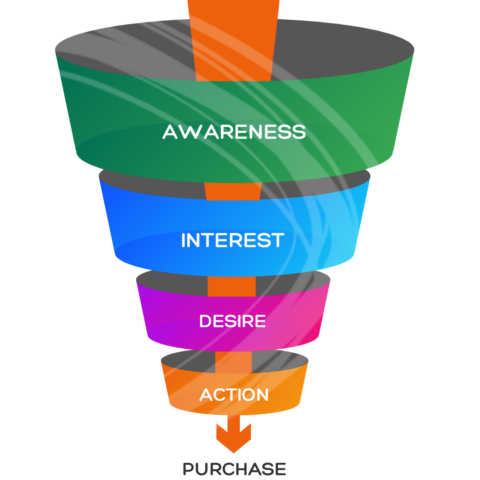
Diagram of the traditional leads funnel showing the linear stages from awareness, through interest and desire to action.


At Koozai, we’ve seen this shift firsthand. Google calls it the Messy Middle – a complex web of decision-making behaviour that better represents the true path to purchase. It’s not a funnel. It’s a loop. And if marketers don’t adapt, they risk losing relevance.

Why the Funnel is Failing

In today’s environment, buyers don’t go from top to bottom in a straight line. Instead, they loop between exploration (research) and evaluation (comparison). A buyer might watch a webinar, abandon the journey, return weeks later via a review site, then ask for a demo. There is no straight path, and attempts to force prospects into one only leads to frustration.
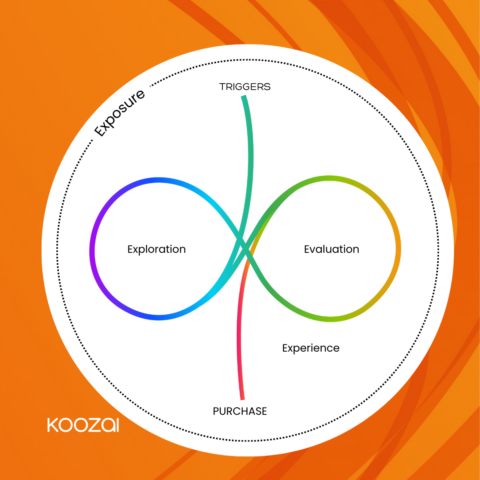
Diagram of the Messy Middle


The Koozai whitepaper, The Marketer’s Playbook for the Messy Middle, outlines this in detail: “Buyers jump between discovery and decision-making, backtrack, and even start over. That’s why we need a new framework.”

Understanding the Messy Middle

Google’s behavioural science research shows that buyers operate within two mental modes: exploration and evaluation. They bounce between these modes repeatedly, influenced by content, search results, peer recommendations, ads, reviews and more.

Exploration is open-ended: searching for ideas, identifying problems, considering options.
Evaluation is comparative: weighing up features, costs, and benefits to narrow down choices.

Unlike the funnel, this process is not sequential. Someone can revisit the same blog post or pricing page multiple times before converting. The job of marketing is to support that looping journey, not to push prospects down a rigid path.

Practical Ways to Adapt

To thrive in the Messy Middle, brands need to:

  • Map content to intent, not to funnel stages.

    Example: Instead of gating all downloadable content behind a form, create blog posts like “How to Choose a CRM Without Overpaying” for those still exploring, and a buyer’s checklist for those in evaluation. Both target different intents – not just different funnel stages.

  • Provide information in multiple formats: blogs, videos, downloadable guides

    Example: Take a high-performing blog post on “Top SEO Tools for 2025” and turn it into a 3-minute explainer video, a downloadable PDF comparison chart, and a short carousel for LinkedIn. Each format meets users on their preferred platform and learning style.

  • Address objections early with transparent FAQs and comparison tools

    Example: A software company could publish an FAQ page answering questions like “Do I need technical skills to use this platform?” or create a “Compare Us vs Competitors” feature to show pricing, onboarding time, and support differences transparently.

  • Use retargeting to stay relevant during evaluation

    Example: If a user downloads a guide or visits a pricing page but doesn’t convert, follow up with display ads highlighting a new testimonial or case study relevant to their sector. Tools like LinkedIn Matched Audiences or Google Ads retargeting make this simple.

  • Content should act as a helpful resource, not a sales push. This is especially true for B2B, where buying cycles can span months.

    Example: An IT services firm might offer a free template for assessing cybersecurity risks or publish a “Beginner’s Guide to Cloud Migration” blog series. These assets deliver value up front without a hard CTA, building trust before pitching services.

Using Psychological Triggers

Cognitive biases play a major role in how people make decisions. The whitepaper outlines several powerful psychological triggers marketers can use in the Messy Middle:

  • Social Proof: Highlight testimonials and case studies.
  • Scarcity: Use limited-time offers or stock availability.
  • Framing: Position benefits in clear, relevant language.
  • Authority: Share insights from industry experts.
  • Commitment: Start with small asks, like a free trial or newsletter.

By applying these techniques, you’re not manipulating buyers, you’re guiding them toward a more confident decision.

Why It Matters Now

Buyer journeys are becoming longer, less predictable, and more independent. If your marketing only speaks to ready-to-buy leads, you’re missing out on the majority of your audience.
The Messy Middle may seem complex, but it reflects how people really buy. Embracing it means greater visibility, improved engagement, and ultimately, more conversions.

Leave a Reply

Your email address will not be published. Required fields are marked *

Sophie Roberts

Managing Director

Sophie Roberts is Managing Director and owner of Koozai, one of the UK’s longest-established digital marketing agencies. Having joined the business in 2016, she became Managing Director in February 2018 before leading a successful management buyout in 2021. With more than 30 years of marketing experience, Sophie specialises in AI Search, Digital PR, marketing strategy, agency leadership and helping businesses adapt to the changing search landscape. She works closely with clients and Koozai’s specialist teams to develop commercially focused digital strategies that improve visibility, strengthen brand authority and deliver measurable business growth. Over the course of her career, Sophie has worked with more than 200 organisations, ranging from ambitious SMEs to household brands including Golden Wonder, Airfix & Humbrol and Victorinox Swiss Army Knives. Since joining Koozai she has helped shape digital strategies for clients including Travelbag, Trevor Sorbie, Red Funnel and Côte Brasserie, building long-term partnerships that often span many years. Although clients often approach Koozai for Technical SEO, PPC, Digital PR or AI Search support, Sophie’s approach has always been to understand the wider business challenge rather than simply deliver a marketing service. She believes the best client relationships come from treating every client’s business as if it were your own, combining commercial thinking with honest advice and a genuine investment in long-term success. Sophie’s career began in public relations, where she led award-winning campaigns before moving into digital marketing. One of her earliest successes was the BBC’s Service! campaign, which won the Catey Award for Best Independent Marketing Campaign and helped raise the profile of front-of-house hospitality careers across the UK. Since then, she has developed marketing strategies for organisations across hospitality, construction, travel, tourism, healthcare, education, retail, ecommerce, finance, automotive and manufacturing, giving her broad commercial experience across both B2B and B2C sectors. More recently, Sophie has become one of Koozai’s leading voices on AI Search and the impact of generative AI on marketing. She has developed the agency’s AI prompt library, built custom GPTs and AI agents to improve internal efficiency, and created Koozai’s AI usage policy to help the business adopt AI responsibly and effectively. She is particularly interested in how AI is changing the way people discover brands, products and services, and what businesses need to do to remain visible as search continues to change. Sophie regularly writes about AI Search, Digital PR, organic growth, marketing strategy, leadership and the practical application of AI in marketing. She also reviews and fact-checks Koozai’s AI Search and digital strategy content before publication, ensuring it is accurate, practical and reflects current best practice. Alongside her agency work, Sophie has delivered webinars on SEO for the construction industry, spoken at digital marketing events across Hampshire, featured in Search With Sean Live and supported the hospitality industry through judging and organising prestigious awards, including the UK Sommelier of the Year and UK Restaurant Manager of the Year. She also served on the organising committee for the National Restaurateurs Dinner. Her work has been recognised through both personal and agency awards, including the Catey Award for Best Independent Marketing Campaign and the Construction Marketing Award for Best Small Agency. Sophie holds a BA (Hons) in Marketing & PR together with Google and HubSpot marketing certifications. She continues to explore how emerging technologies can improve marketing effectiveness while keeping people, creativity and commercial thinking at the heart of every strategy. Her insights and commentary have been featured by publications including Moz, Sitebulb, Yahoo News, The Business Magazine, Hampshire Business News, Portsmouth News, The Daily Echo, Professional Electrician, The Caterer, Restaurant Online, HVP Magazine and many other industry publications. Away from work, Sophie is a self-confessed foodie, proud geek and lifelong learner who believes every day should be a school day. She is passionate about creating positive workplace cultures, supporting work-life balance and helping people build careers they genuinely enjoy.

Sophie Roberts Read more about Sophie Roberts
aspect-ratio
TV Interview
Isobel Walster

Koozai Couch: Interview with Jojo Furnival

Isobel Walster
14th Aug 2026
aspect-ratio
Liam Fernie

SEO Unpacked: What really is a Technical audit and how do you perform one?

Liam Fernie
12th Aug 2026
aspect-ratio
Sophie Roberts

The Real Financial Services Search Journey: What Your Customers See Before They See You

Sophie Roberts
@hospitalitysoph
7th Aug 2026
AI
aspect-ratio
Kelly-Anne Crean

SEO’s Hidden Value: Why Attribution Models and AI Search Are Changing How We Measure Organic Success

Kelly-Anne Crean
6th Aug 2026
SEO Blog

Digital Ideas Monthly

Sign up now and get our free monthly email. It’s filled with our favourite pieces of the news from the industry, SEO, PPC, Social Media and more. And, don’t forget – it’s free, so why haven’t you signed up already?