By now, you have probably experienced AI in some capacity, whether it’s from search engines, large language models, social media, emails, even spreadsheets. It’s at the point where we can no longer escape AI in the digital world, and whether you love or hate it, it’s beginning to blur the lines on the amount of control we have in the paid marketing realm.
As someone who has worked in paid media marketing for nearly 10 years, I’ve seen the landscape change a million times over, with every new feature attempting to make paid media easier. Whether it’s become easier is something different altogether, but the one thing that has become prominent in paid media marketing is automation.
Almost everything can be done by clicking a few buttons, from innovative audiences to target, new and exciting ad copy, fresh images and videos, even a list of keywords for a new campaign. It can all be asked, and AI will wish it into reality before your eyes. Let’s be real, even though automation and AI seems like magic, it’s a sure-fire way for your ads to spend your ad budget on elements that could be irrelevant to your business.
Google sends out a clear message:
- Trust the algorithm
- Give the algorithm more data
- Simplify campaign structure
- Use AI to find your users
Although here at Koozai, we agree with what Google is saying, there’s still a lot of measures you should put in place to ensure you’re not allowing Google to run away with spend.
We can’t just put blind trust into Google. Take AI Max as an example. Many businesses activate AI Max and allow Google to use Text Customisation to create new headlines and descriptions based on their website. This seems fine at first glance but from our experience, we have witnessed Google’s AI generating headlines based on pages that are irrelevant to the keyword being used in the ad group, leading to irrelevant ad copy and sometimes complete errors.
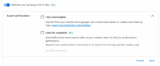
To take control of your AI Max campaigns, untick the ‘Text customisation’ and ‘Final URL expansion’ boxes. Your ads will still appear in AI Mode placements but with control over what ad copy appears rather than Google’s interpretation of what they think they want your audience to see.
How do you take control of automation?
Be selective:
Use automation selectively, with the best accounts using a hybrid approach rather than an automation only approach.
- Use automation (bidding strategies) on high volume and stable campaigns.
- Don’t use AI or automation on niche campaigns as you’re more at risk of wasting spend in areas that require more control.
- Use AI to create ad copy, edit and upload it yourself.
- Don’t use Google or Meta’s AI ad copy as it can create irrelevant headlines and descriptions.
Steer your campaigns:
Set guardrails from the start.
- Be aggressive on negative keyword lists to filter out unwanted and irrelevant traffic.
- Select the correct placements for your campaigns to reduce wasted spend.
- Ensure you’re launching your campaigns with the correct conversion tracking to avoid wrong algorithm learnings.
Using these simple guardrails can decrease costs, increase relevant traffic, and allow your campaigns to optimise towards the goals you want to achieve.
Separate objectives:
A mistake we tend to see regularly is businesses mixing branded and non-branded campaigns in one. We recommend:
- Setting up a brand only campaign that is geared towards only picking up branded terms.
- Adding brand negative keywords to all non-brand campaigns to ensure your brand campaign picks up these searches.
- Separate higher and lower funnel activity into their own campaigns.
- If you notice you’re getting higher quality conversions from a specific group of keywords, separate this into its own campaign so you can funnel spend in the right direction.
Final thoughts:
AI and automation isn’t broken, it just needs your input and control. The accounts that will outshine will be those that embrace automation alongside control, not by using one or the other. Use automation to strengthen your strategy, not replace it.








Leave a Reply