
How to Set Up Your Construction Business Online: A 5 Step Action Plan
Welcome to the future of marketing for construction companies. As a construction marketer you are standing on the edge of one of the fastest moving sectors that there is today. For a long time, businesses like yours relied on personal interactions with specifiers and architects at trade shows, exhibitions, and face to face CPDs.
Hours spent travelling, pressing the flesh, explaining your product, and eating lunch (well okay maybe the lunches weren’t so bad). Days stood on stands at exhibitions that oftentimes resulted in very little other than sore feet and an aching back.
Unfortunately, huge swathes of businesses in the sector still do this. The problem is that in a lot of cases these businesses are targeting the specifier at the wrong point in their buying journey or, worse still, the wrong specifier entirely. Add to that the fact that it’s not easy to measure the results from the channels they’re using, and you can understand why a change is afoot.
A Growing Market of Search-Savvy Construction Buyers
On the flip side, specifiers, architects, and buyers are becoming much more digitally savvy. Recent research has shown that over 98% prefer to conduct their research for products and services online. Over 2.5 million Google searches were made for building suppliers in the UK over the last year alone. This number expands into the many more millions of searches for different types of construction products and services. So, online in search engines is where you need your business to be found.
The good news is this is all a huge opportunity for you. To get ahead you simply need to embrace digital marketing. Everything you do should be laser-focussed, measurable and provide a good return on investment. If you don’t, you’re in danger of being left behind. Given you’re even reading this article means you’re ready to embrace this change and learn some of the fundamentals that could make a massive difference to your business.
5 Steps to Take Your Construction Business Online
First of all, you need to understand how technology and the internet has become THE way of doing business. Your customers; architects, buyers and specifiers have all changed the way they research. Instead of being ‘sold to’ by pushy marketers now all they need do is ‘Google it’. The start point of the customer journey generally begins by typing a query, problem, or question into a search engine such as Google or Bing.
Google will provide the searcher with links to webpages that it believes are most relevant based on (a super-secret) algorithm and information gathered by search engine ‘spiders’. Being on page 1 of Google means your page is most appropriate to the search query. These formulas, known as algorithms, are constantly changing as the search engines strive to achieve improved results for the user. So, you just need to ensure your web pages provide solutions to the queries and problems your target audience is searching for.
Simple right! So, how do you do it?
- Get a Professional Website
- Set Up Data tracking
- Optimise Your Website to be Found on Search Engines (SEO)
- Create Compelling & Search-Friendly Content
- Build Backlinks & PR Your Website
Step 1: Get a Professional Website
First of all, you need a professional website – this is your shop window. It needs to reflect your brand and enable a visitor to navigate to what they want to find quickly and easily.
This sounds simple but all too often websites fall down in this area. As it is important to have a solid foundation prior to building – so it is with websites. Ensure that the site is not going to cause problems later by ensuring it’s fit for purpose.
Your site should include pages which provide visitors with relevant information and can include a contact us page, a blog, an about us page and pages on your products and services.
Depending on your business there are other pages you should consider, such as testimonials, case studies or an online shop or ordering facility, including any payment functionality.
Step 2. Set Up Data tracking
A very important step that is often missed out is data tracking.
In order that you can accurately track how different activities, channels, and platforms are performing you need to ensure you have your analytics set up properly.
You need to be able to see what return on investment you’re getting. If you’re looking for leads, it may be that you need a goal set-up in analytics to capture each time a person submits a contact us form, or to implement call tracking. With eCommerce you want to know how much was spent and where that sale is attributed to. That way you can optimise your marketing budget in the areas you know are working.
Again, this sounds simple, but it can be a minefield if you’re doing it yourself and are unfamiliar with the platforms. It’s so easy to miss a step and then realise down the line that the data you’ve been looking at is wrong. We often see conflicting, mis-firing, and broken versions of Google Analytics (GA), Global Site Tag (Gtag), and Google Tag Manager (GTM) implemented on sites. If you want to understand more about what do they do and which ones are preferred you can read our blog here.
Step 3: Optimise Your Website to be Found on Search Engines (SEO)
Once this is set up you need to address the site from a Search Engine Optimisation (SEO) point of view. In its simplest form SEO is about making changes to your website to encourage Google to show your pages to the person who is searching.
Unfortunately, Google keeps many of the details of what makes a page rank better than another a closely guarded secret but experts like us have tried and tested processes that we know move the needle in your favour.
There are a number of considerations, including the technical elements of how it’s set up, your trust signals, the content on your website and the backlinks pointing to your website from news articles and other third-party sites. To really move the needle, you need to address these technical aspects of your site, create search optimised content and build links from other websites to yours through digital PR and link building.
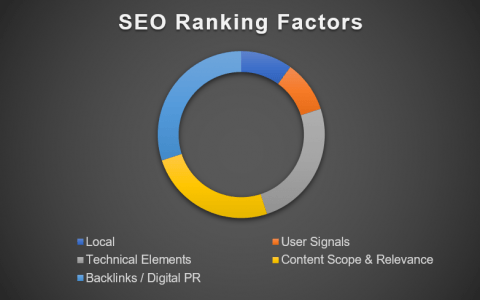
SEO takes time and is an ongoing process. From the point changes are made, it generally takes about 6 months to start seeing the impact, so you need to be patient. Also, you need to remember that Google continues to develop its algorithm and so SEO needs to develop with it. SEO is never ‘done’.
Text will always be the foundation of search so making sure the text around your website’s assets is descriptive will help them rank well in search. (HubSpot, 2020) (Source:https://www.hubspot.com/marketing-statistics)
Step 4: Create Compelling & Search-Friendly Content
Content marketing is a vital way to establish your business as the trusted expert in your sector. When you tailor the content on your site to the potential specifier or architect’s need, you are helping them make a better buying decision.
As the specifier is searching for a solution, this is what you need to provide with content. Without effective copy, Google won’t be able to crawl and index pages on your site, which will limit your opportunity to be found by potential customers. Think about what your target audience might ask search engines and craft your content around that. There are several free tools that can help you find out what is being searched for, or an agency like ourselves can help and will have access to the latest paid-for tools.
Google rewards informative and relevant content. This can be done in many ways, some of the most popular are providing content in the form of FAQs, a blog, or newsletters.
Step 5: Build backlinks and PR your website
Most people think that PR is only important for promoting your business to the media, however, it is also a key factor that influences how you can be found by potential customers in search engines like Google.
PR does this by building backlinks. These are the links you find in news articles or in web pages that take you through to another website when you click on them. The quality and quantity of links from other sites that go through to your website have a significant influence on where your website will appear in the results when people search for products and services on Google.
Google’s ‘spider’ algorithm also uses backlinks to crawl the internet, so the more backlinks your website has, the more potential it has to be found and indexed.
However, not all links to your website are created equal and good links are hard-earned through PR campaigns and link-building activities. A professional digital PR agency will be able to help you identify which links are most valuable and how to achieve them.
There is much more to digital marketing than what we’ve been able to put here. However, implementing these basics will give you a solid footing.
The market is changing. Digital marketing is levelling the playing field and if you move early, it will allow you to get the jump on your competitors and to position yourselves as a trusted source of help to your potential customers. I’d call that a win-win.
If you need any more help or advice on how to market or take your construction business online, then drop us a line.







Leave a Reply