
Most of us won’t wait long for a slow website.
Google says 53% of mobile visits are likely to be abandoned when a page takes longer than three seconds to load. Yet when demand is high enough, people will stay in online queues for hours.
The latest example came from the Bayeux Tapestry exhibition at the British Museum, where visitors were warned that waits could reach nine hours.
That’s 32,400 seconds, or 10,800 times longer than Google’s three-second benchmark.
So, why will people abandon one digital experience almost immediately, but remain in another for most of the day?
The longest waits in our analysis
We reviewed reported waiting times linked to 25 high-demand ticket releases across music, sport, history, theatre and popular culture.
The Bayeux Tapestry had the third-longest reported wait among the events we analysed.
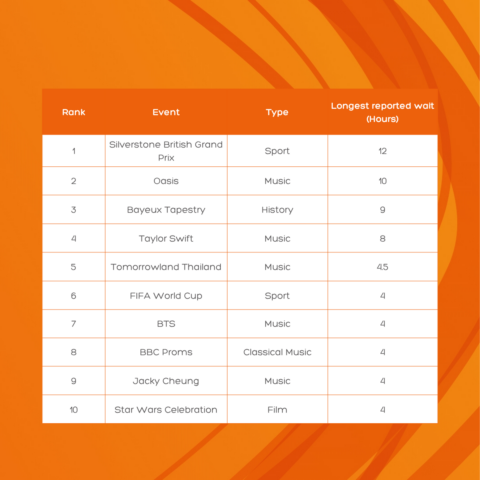
Its reported wait exceeded those linked to Taylor Swift, BTS, Adele, Beyoncé and the FIFA World Cup.
Not bad for an object created almost 1,000 years ago.
These aren’t necessarily the longest online queues ever recorded. They’re the longest reported waits among the 25 releases included in our analysis.
Why do people stay?
People haven’t suddenly become more patient. High-demand releases create a strong mix of value, urgency and scarcity.
The opportunity feels rare
People are more willing to wait when they believe they may not get another chance.
That applies to reunion tours, major finals and limited exhibitions. By the time tickets go on sale, many customers have already decided that missing out matters more than the inconvenience of waiting.
The value is clear
Fans already know why they want to see a particular artist. Supporters understand why a major sporting event matters. Visitors recognise the importance of an exhibition such as the Bayeux Tapestry.
The clearer the value, the more motivated people are to complete the booking.
The scarcity is genuine
Limited tickets and fixed dates give people a clear reason to remain in the queue.
Scarcity works best when it’s real and clearly explained. Vague “selling fast” messages may create pressure, but they can also damage trust.
The queue explains what’s happening
A slow webpage may leave users wondering whether the site is broken.
A well-designed queue tells people that their place is being held, how long they may need to wait and what happens next.
When delays can’t be avoided, clear communication can make the experience feel more reliable.
What can marketers learn?
The lesson isn’t to make people wait.
Most brands can’t expect customers to tolerate hours of inconvenience. Instead, high-demand launches show how much a strong proposition can change someone’s tolerance for friction.
Marketers should focus on three things:
- Build demand before asking people to convert
- Prepare websites for peak campaign traffic
- Communicate clearly when delays happen
A sell-out doesn’t automatically mean the customer experience was good. Strong demand can hide abandoned visits, failed payments and frustrated customers.
The best launches combine a compelling offer with a digital experience that makes it easy for people to act.
Methodology
Koozai reviewed reported waiting times linked to 25 high-demand ticket releases.
Events were ranked using the longest waits found in media coverage, organiser information or documented customer accounts.
The findings aren’t an exhaustive ranking of every online ticket queue. Google’s three-second figure relates to mobile page-loading behaviour and is used as an illustrative comparison.








Leave a Reply